Beard Growth Kits

 Beard Grooming Kits

 Beard Color Kits


The chin strap beard is one of the most precise, sharp-looking facial hair styles a guy can wear. A narrow band of hair tracing your jawline, no mustache, no fuss. The style first appeared in the late 1700s and got its name from 20th-century football helmets. It's having a sharp resurgence, with Lewis Hamilton, Stormzy, and Drake all sporting variations on red carpets and at trackside.
Whether you're trying a chin strap for the first time or refining the one you already wear, here's the complete guide to the 12 best chin strap beard styles, which one fits your face shape, and how to shape and maintain each one.
Quick Answer The most popular chin strap beard styles in 2026 are the Classic Chin Strap, the Faded Chin Strap, and the Chin Strap with Goatee. The style works best on oval, square, oblong, and diamond face shapes. Most variations take 2 to 4 weeks to grow and need touch-ups every 2 to 3 days to stay sharp. If it's your first time, start with the Classic.
Why Chin Straps Are Back

After years of full beards leading the conversation, the chin strap is enjoying a major comeback as part of the wider shift toward sharper, more minimalist grooming. The look reads clean, confident, and intentional. Three things are driving the revival:
Lewis Hamilton has worn a thin chin strap consistently at F1 race weekends. Stormzy made the look central to his current era of music and style. Drake has shifted between a classic chin strap and a chin strap goatee for years. Add a younger generation rediscovering the look on social media, and the style has gone from a 2000s throwback to one of the most-requested barbershop styles.
If you've been thinking about something cleaner and more defined than a full beard, this is the year for it.
What Is a Chin Strap Beard?
A chin strap beard is a narrow strip of facial hair that runs from one sideburn, down along your jawline, across your chin, and back up to the other sideburn. The cheeks and upper lip stay clean-shaven, which is what creates the signature sharp outline. The style emphasizes the jawline and chin while keeping the rest of the face open and visible.
The band itself usually runs between 5 and 15 mm wide. Thinner straps create a sharper, more modern look. Thicker straps lean more rugged. Most chin straps skip the mustache, though some variations pair the strap with a mustache, goatee, or beardstache for a fuller look.
How to Choose the Right Chin Strap for Your Face Shape
The biggest factor in whether a chin strap flatters you is your face shape. Some shapes benefit from the sharp horizontal line it creates, while others may not reap the same balancing.
| Face Shape | Best Chin Strap Styles | Why It Works | Styles to Skip |
|---|---|---|---|
| Oval | Almost any style | The most versatile face shape for a chin strap | Nothing critical |
| Square | Classic, Defined, Anchor | Adds visual weight at the chin and softens hard jaw angles | Very thin straps that exaggerate the jaw line |
| Oblong / Long | Classic, Puffy, Chin Strap with Goatee | Adds horizontal width at the chin to shorten the face | Long extended straps that lengthen the face further |
| Diamond | Classic, Faded, Stubble | Balances narrow chin and forehead with a defined jawline | Wide or puffy variations |
| Round | Defined, Extended, Beardstache combo | Adds vertical and horizontal structure to slim the face | Thin minimalist straps that disappear |
| Triangle / Heart | Use with caution | The chin strap draws attention to a chin that's already a focal point | Most chin strap styles; consider a goatee or beardstache instead |
If you're not sure of your face shape, take a selfie head-on and trace the outline. Measure across your cheekbones, from hairline to chin, and across the jawline. Similar numbers across the cheek and jaw mean square or round. Narrower at the chin than the cheeks means heart. Wider at the cheeks than the forehead and jaw means diamond.
Classic Chin Strap Beard Styles
These are the foundational chin strap looks. Simple lines, recognizable shapes, and the easiest entry points for guys trying the style for the first time.
1. The Classic Chin Strap
The original and still the most flattering chin strap variation. A clean, even band running from sideburn to sideburn along the jawline at a medium width. Reads sharp, masculine, and intentional. The Classic is your default starting point and the look most guys think of when they hear "chin strap beard."
How to shape it: Grow heavy stubble across your full face for 2 to 3 weeks. Trim to an even 4 to 5 mm length using a precision t-blade beard trimmer. Define the top edge of the strap by following your jawline, and shave everything above the line clean. Repeat on the neck below the strap.
How to maintain it: Touch up the lines every 2 to 3 days. Apply beard growth oil daily to keep the skin around the strap healthy. Use a precision trimmer for the lines and a razor for any final cleanup.
2. The Thin Chin Strap
The pencil-thin version of the classic look features a band that stays narrow and sharp, hugging the jawline tightly. Reads as polished and modern. The thin chin strap suits guys with strong, well-defined facial features and works particularly well with shorter haircuts and a clean overall style.
How to shape it: Grow stubble for about 10 to 14 days. Trim to 2 to 3 mm length, then use a precision trimmer to outline a narrow band along the jaw. Aim for 5 to 7 mm width at the widest point. Shave everything above and below the band cleanly with a razor for sharp edges.
How to maintain it: Daily touch-ups are common with this style because any stubble growth blurs the sharp lines. Use beard growth oil to soothe the skin and a derma roller two times per week to keep the area healthy.
3. The Stubble Chin Strap
This look is a lower-maintenance variation that lives at heavy stubble length. Less precise than the Classic or Thin versions, with softer edges and a more lived-in look. Works for guys who want the chin strap aesthetic without committing to daily touch-ups.
How to shape it: Grow heavy stubble across your face for 7 to 10 days. Trim to 3 to 4 mm length. Outline a wider band along the jaw, keeping the edges slightly softer rather than razor-sharp. Shave the cheeks and neck clean but allow some natural fade at the borders.
How to maintain it: Touch up every 3 to 4 days. Apply biotin growth balm to keep the stubble soft and the skin underneath in good shape.
Modern Chin Strap Beard Styles

These are the variations driving the chin strap revival. Cleaner edges, modern proportions, and styles that pair well with current haircut trends like fades and textured crops.
4. The Disconnected Chin Strap
This look features a deliberate break in the line. The strap may not connect with your sideburns, or it may have a clean-shaved gap somewhere along the jaw. Creates an edgy, modern silhouette that breaks from the traditional uninterrupted band. One of the most popular variations among barbers and stylists.
How to shape it: Shape a Classic chin strap first. Use a precision trimmer or razor to create a clean, shaved break, typically about 5 to 10 mm wide, somewhere along the jaw. Most guys position the break either where the jaw meets the ear or at the corner of the chin.
How to maintain it: Re-shave the break every 2 to 3 days to keep it crisp. Apply beard oil to the skin both inside and around the break to prevent dryness.
5. The Faded Chin Strap
The faded chin strap style is one of the most requested as of late. The beard fades smoothly from skin or very short stubble at the sideburn to a fuller length at the chin and jaw. Pairs especially well with a fade haircut. Requires more skill to execute well, which is why most guys book a barber for the initial shape and maintain between visits.
How to shape it: Grow a full chin strap base for 3 to 4 weeks. Use multiple guard lengths (typically a 0 or 1 at the top, working down through 2 and 3 toward the chin) to create the gradient. Blend transitions with a precision trimmer. Many guys find this style much easier when a barber sets the initial fade lines.
How to maintain it: Visit a barber every 2 to 3 weeks to maintain the fade lines. Between visits, use a precision trimmer to clean up the edges. Apply beard growth oil daily to keep the skin healthy across the fade transition.
6. The Extended Chin Strap
This style is a wider, bolder chin strap that extends higher up the cheeks toward the hairline. The strap is more present and prominent than the Classic version, reading as confident and structured.
How to shape it: Grow stubble across your full face for 3 to 4 weeks. Trim to 4 to 5 mm. Outline a wide band that follows the jaw but extends higher up the cheek line, leaving more hair than the Classic version. Define the edges sharply with a precision trimmer.
How to maintain it: Touch up every 2 to 3 days. Apply beard growth gummies to support the density needed for the wider strap to look full.
7. The Anchor Chin Strap
An anchor variation is the chin strap style with a pointed extension at the center of the chin, often paired with a mustache that connects through narrow strips. The combined silhouette resembles an anchor. One of the cleanest and most refined chin strap combinations. Works particularly well for guys who want structure beyond a simple band.
How to shape it: Grow a Classic chin strap base for 3 to 4 weeks, with mustache hair grown in at the same time. Shape the chin strap to extend slightly past the chin in a pointed shape. Connect the mustache to the chin point with narrow vertical strips on either side of the mouth.
How to maintain it: Touch up every 2 to 3 days. Use a precision trimmer for the lines and a razor for the surrounding clean areas. Apply beard oil to keep both the mustache and chin areas conditioned.
Chin Strap Combo Styles
These pair the chin strap with a mustache, goatee, or beardstache for a fuller look. Good options for guys with patchy cheek growth or those who want more visual weight on the face.
8. The Chin Strap with Goatee
Combine your look with a small chin patch or full goatee. This look adds visual weight to the chin and frames the mouth. One of the most popular chin strap variations is because it offers more presence than a pure strap while still keeping the cheeks open and clean.
How to shape it: Grow a chin strap base, leaving the chin patch and area around the mouth to grow fuller. Shape the strap along the jaw, then define the goatee shape around the mouth and chin. The two pieces should be the same length for continuity.
How to maintain it: Touch up every 2 to 3 days. Use beard growth oil across the strap and goatee. A fine-tooth comb helps keep the goatee evenly distributed.
9. The Beardstache Chin Strap
The beardstache variation is a chin strap paired with a thick, prominent mustache. The mustache is grown out longer and fuller than the strap, drawing attention to the upper face while the chin strap anchors the jaw. Works for almost every face shape and reads as one of the most distinctive chin strap variations.
How to shape it: Grow a chin strap base and let your mustache grow in fully at the same time. After 4 to 6 weeks, shape the strap along the jaw and let the mustache continue to grow longer and thicker than the rest. Keep the strap and mustache disconnected for the strongest version of the look.
How to maintain it: Touch up the strap every 2 to 3 days. Use mustache wax to keep the longer mustache hairs shaped. Apply beard oil to both areas daily.
10. The Chin Strap with Mustache
A chin strap paired with a clean, evenly-trimmed mustache. The mustache stays the same length as the strap for visual continuity. Less dramatic than the Beardstache version but more balanced for guys who want a moderate amount of facial hair.
How to shape it: Grow the chin strap and mustache simultaneously. Trim both to the same length, typically 3 to 5 mm. Keep the strap and mustache visually separate by maintaining a clean shaved gap from the corners of the mouth down to the jaw.
How to maintain it: Touch up every 2 to 3 days. Comb the mustache daily to train direction. Apply beard oil to both the strap and mustache.
Custom Chin Strap Approaches
Two final variations that don't fit the standard categories but solve specific problems many guys run into.
11. The Defined Chin Strap
A fuller, slightly longer version of the chin strap that includes a matched mustache. The strap and mustache are the same length throughout for continuity, and the overall look is more rugged than the Classic version. The closest the chin strap comes to a short full beard while still keeping the cheek lines clean and defined.
How to shape it: Grow a chin strap base with mustache included for 4 to 6 weeks. Trim everything to a consistent length of 6 to 8 mm using a clipper guard. Define the cheek line cleanly, leaving the strap wider than a Classic version.
How to maintain it: Touch up every 3 to 5 days. Use a guard to maintain a consistent length across the strap and mustache. Apply biotin growth balm to keep the look conditioned and full.
12. The Patchy-Friendly Chin Strap
Looking for a chin strap variation designed for guys with uneven cheek or jaw growth? For this style, the strap is kept slightly wider than usual to allow more density, and a small amount of hair is left along the neck below the strap to create the illusion of fullness. One of the most forgiving facial hair styles for patchy growth in general.
How to shape it: Grow whatever facial hair will come in for at least 3 to 4 weeks. Trim to your fullest length without going shorter than 4 mm. Outline a wider chin strap that uses the densest sections of your growth. Leave a small amount of softer stubble below the strap line.
How to maintain it: Touch up every 3 to 4 days. Use a derma roller twice per week to encourage thicker growth in the strap area. Apply beard growth oil daily and consider beard growth vitamins to support density over time.
All 12 Chin Strap Styles at a Glance
| Style | Grow Time | Width | Difficulty | Best Face Shapes |
|---|---|---|---|---|
| Classic | 2 to 3 weeks | 8 to 12 mm | Easy | Oval, Square, Oblong |
| Thin | 1 to 2 weeks | 5 to 7 mm | Medium | Diamond, Round, Oblong |
| Stubble | 7 to 10 days | 8 to 12 mm | Easy | Oval, Square, Diamond |
| Disconnected | 2 to 3 weeks | 8 to 12 mm | Medium | Oval, Square, Round |
| Faded | 3 to 4 weeks | 10 to 15 mm | Hard | Oval, Diamond, Square |
| Extended | 3 to 4 weeks | 12 to 18 mm | Medium | Square, Round |
| Anchor | 3 to 4 weeks | 8 to 12 mm | Hard | Square, Diamond |
| With Goatee | 3 to 4 weeks | 8 to 12 mm | Medium | Oval, Round, Diamond |
| Beardstache | 4 to 6 weeks | 10 to 15 mm | Medium | All shapes |
| With Mustache | 3 to 4 weeks | 8 to 12 mm | Medium | Oval, Square, Oblong |
| Defined | 4 to 6 weeks | 12 to 18 mm | Medium | All shapes |
| Patchy-Friendly | 3 to 4 weeks | 10 to 15 mm | Medium | All shapes |
5 Steps for How to Grow a Chin Strap Beard
Most chin strap styles take 2 to 4 weeks to reach a workable length from clean-shaven. Follow these steps to get there with the best possible base:
- Stop shaving for 10 to 14 days. Let your full face grow heavy stubble before shaping. You'll need material across the jawline and chin to outline a clean strap.
- Apply beard growth oil daily. Morning and night application keeps the skin underneath healthy and supports denser growth.
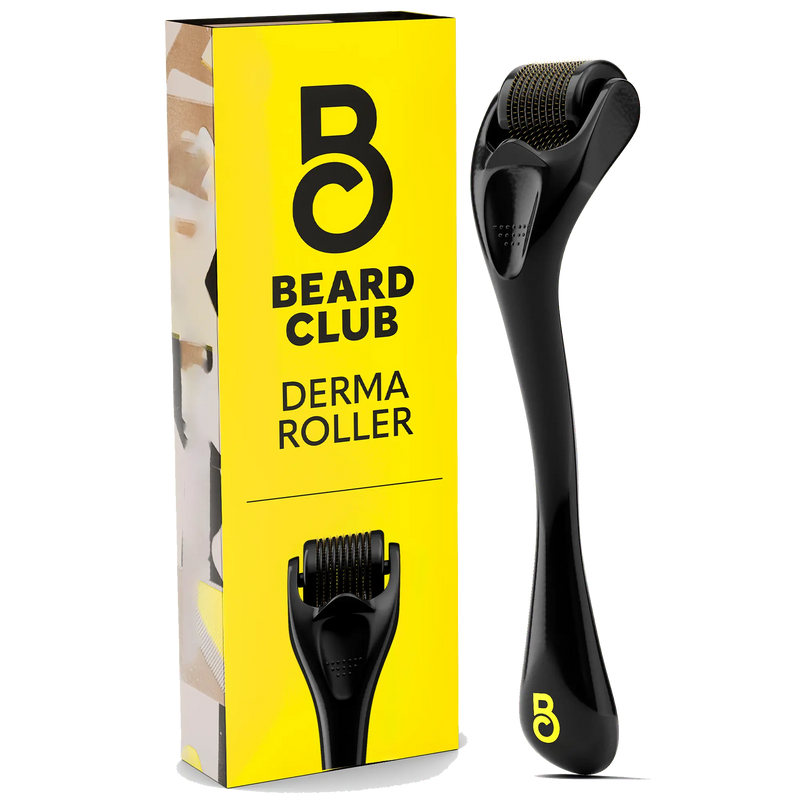
- Use a derma roller two times per week. Stimulates blood flow to follicles in the chin strap zone and helps fill in patchy areas.
- Take beard growth vitamins if you want denser growth. A consistent 12-week routine supports the density needed for fuller chin strap variations.
- Don't shape too early. Wait until you have at least 4 to 5 mm of even growth before outlining the strap. Shaping prematurely makes patchy spots look worse.
Patchy growth is the most common roadblock. If your cheeks are coming in thin but your jawline and chin are filling in, the chin strap is actually one of the better styles for you because it only uses the dense areas. For a full walkthrough on density, the beard genetics guide covers what's possible and what to expect.
7 Shaping Tips for Clean Lines
Once you have a solid base, shaping the strap takes about 10 minutes. Here's the process:
- Start dry. Wet hair sits differently than dry hair. Shape your strap dry so you see the real result.
- Trim to even length first. Use a trimmer guard at 3 to 5 mm to take the full beard down to a consistent length across the face.
- Find the centerline of your jaw. This is where the top edge of your chin strap will sit. Everything above this line will be shaved clean.
- Outline the top edge with a precision trimmer. Follow the jawline from one sideburn down to the chin, across, and up to the other sideburn. Keep the line consistent in width.
- Outline the bottom edge. The neck line should sit about a finger-width above the Adam's apple. Any neckbeard kills the clean chin strap look.
- Shave everything outside the strap. Use a straight-edge razor for the cleanest finish, or a standard razor with care.
- Touch up symmetry. Check both sides in the mirror. The chin strap should mirror cleanly left to right. Small adjustments are normal.
Pro tip: Sharpie a faint guideline along your jaw before your first chin strap shape. The line wipes off with a damp cloth, but it gives you a reference point for keeping both sides symmetrical while you trim.
How to Maintain Your New Look
The chin strap lives and dies by its edges. Maintenance is straightforward but frequent.
- Touch up the lines every 2 to 3 days. Stubble growth blurs the strap's sharp definition within 48 hours. Daily touch-ups are normal for the thinner variations.
- Apply beard oil every day. Keeps the skin underneath healthy and prevents the dryness that comes with frequent shaving around the strap.
- Use a balm for hold and conditioning. Especially helpful for the longer Defined and Beardstache variations.
- Comb daily. Even a narrow strap benefits from a fine-tooth comb to train direction and remove tangles.
- Wash 2 to 3 times per week. Use a dedicated beard wash, not regular shampoo, to clean without stripping natural oils.
- Book a barber for the trickier variations. The Faded and Anchor variations are much easier to maintain when a barber sets the initial shape every 2 to 3 weeks.
For guys covering grays in the chin strap, The Beard Club's beard color products handle both ends of the spectrum. The permanent beard dye lasts 4 to 6 weeks, and the 1-day temporary beard color gives you 30-second touch-ups whenever you need them.
Your Next Move
Whichever chin strap variation you go with, the formula is the same. Grow your base, shape with intention, and keep the edges sharp with regular touch-ups. The look only works as well as your maintenance routine supports it.
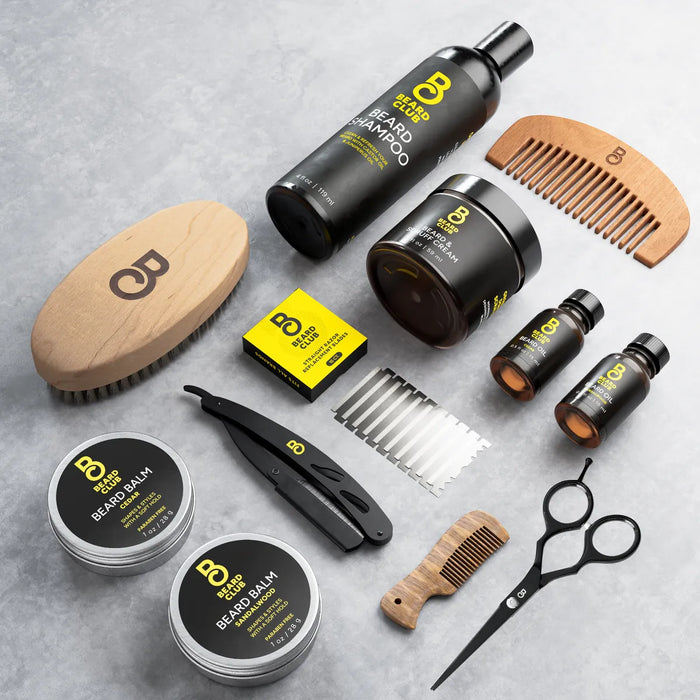
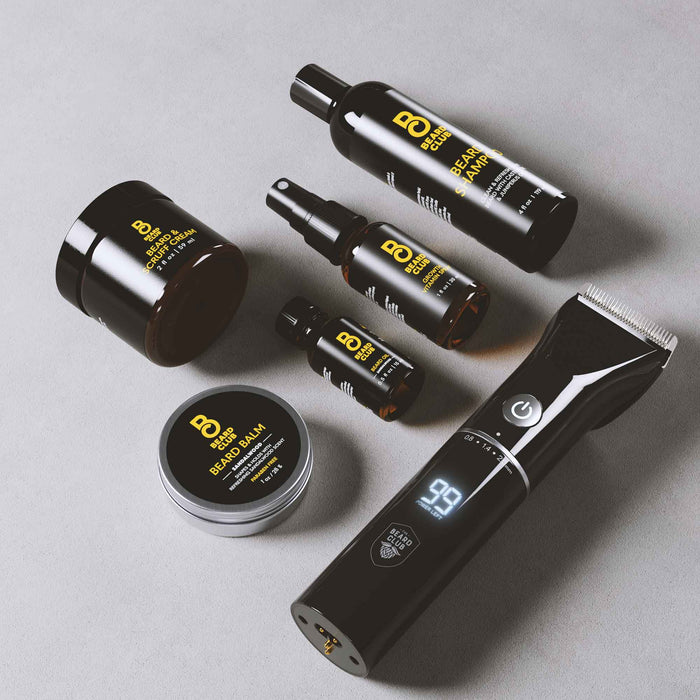
If you're just getting started, our beard growth kits bundle everything you need to grow a solid chin strap base. The Starter Growth Kit is the lowest-commitment entry point, while the Advanced and Ultimate kits add the tools for guys committing to thicker variations or pairing the strap with a mustache. Pick your style, grab the kit, and start shaping.

Frequently Asked Questions
What is a chin strap beard?
A chin strap beard is a narrow band of facial hair that runs from your sideburns down along your jawline and across your chin, with the cheeks and upper lip clean-shaven. The name comes from the resemblance to the chin strap on a football helmet. The style emphasizes the jawline and creates a sharp, defined facial outline.
Does a chin strap beard look good?
A chin strap beard looks sharp when it suits your face shape and is well-maintained. It works best on oval, square, oblong, and diamond face shapes. Lewis Hamilton, Stormzy, and Drake have all worn variations of the chin strap as a clean, modern look.
What face shape suits a chin strap beard?
Oval, square, oblong, and diamond face shapes wear a chin strap best. Square faces benefit from the way the beard softens hard jaw angles. Oblong faces get visual weight added at the chin. Triangle and heart-shaped faces tend to look unbalanced because the chin strap draws attention to an already-prominent chin.
How long does it take to grow a chin strap beard?
Most chin strap styles need 2 to 4 weeks of growth to reach a workable length. The Classic and Thin chin strap can be shaped from heavy stubble after about 10 to 14 days. Thicker variations like the Defined or Extended chin strap need 4 to 6 weeks for proper fullness.
How wide should a chin strap beard be?
Most chin strap beards measure between 5 and 15 mm wide along the jawline. Thin chin straps stay around 5 to 8 mm for a sharp, minimalist look. Thicker chin straps run 10 to 15 mm for a bolder, more rugged version. Going wider than 15 mm starts pushing into chin curtain territory.
Can you have a chin strap beard with patchy growth?
Yes. The chin strap is one of the most forgiving styles for patchy growth because it covers a narrow band rather than the whole face. A patchy-friendly chin strap leaves slightly more hair along the neck to create the illusion of fullness, and a defined, sharp edge along the jaw masks any inconsistencies above it.
What's the difference between a chin strap and a chin curtain?
A chin strap is a narrow band of hair (5 to 15 mm) following the jawline, typically without a mustache. A chin curtain is wider and fuller, covering more of the chin and lower jaw with a softer, more natural shape. Abraham Lincoln wore a chin curtain; modern chin straps are a sharper, more sculpted evolution of the same idea.