A curly beard has more texture and more volume than a straight one, and it can look fuller with less hair. It also asks for a different playbook. Curls dry out faster, tangle more easily, shrink when they dry, and have a habit of curving back into the skin after a close shave. Use the same routine a straight-bearded friend swears by and you'll likely end up with frizz, itch, and a crop of bumps along your neck.
This guide covers curly beard care from the skin up: how to wash and condition curls without stripping them, how to trim a beard that springs back shorter than it looks, and how to prevent the ingrown hairs and razor bumps that curly hair is especially prone to.
TL;DR
Curly beards need more moisture, gentler detangling, and a different approach to length and shaving.
- Moisture first: Wash two or three times a week, condition every time, and oil daily.
- Detangle damp: Use a wide-tooth comb or pick on damp hair, working from the ends up.
- Trim dry: Curls shrink as they dry, so trimming wet takes off more than you planned.
- Start long: Begin a guard or two longer than your target and work down.
- Avoid ultra-close shaves: Leaving a millimeter or more of hair at the edges is the simplest way to prevent razor bumps.
- Shave with the grain: When you do shave, follow the direction of growth and don't stretch the skin.
What Makes a Beard Curly
The shape of your follicle decides the shape of your hair. Round follicles push out straight hair, while oval or curved follicles produce hair that bends as it grows. The flatter and more curved the follicle, the tighter the curl. Genetics sets this, and it's common for beard hair to be curlier than the hair on your head, even if your scalp hair is fairly straight.
That curved shape explains most curly beard problems. Natural oils from the skin travel easily down a straight hair but struggle to make it around each bend in a curl, so curly beards feel drier and frizz more readily. The same curve means a freshly cut hair can grow back toward the skin instead of away from it, which is where ingrown hairs come from.
Know Your Curl Type
Curly beards cover a wide range, and the tighter your curl, the more moisture and care it needs. Find yours below.
| Curl Type | What It Looks Like | Main Challenge | Focus On |
|---|---|---|---|
| Wavy | Loose S-shaped bends, lies fairly flat | Frizz and uneven shape | Light oil, daily brushing to train direction |
| Curly | Defined ringlets or spirals with volume | Dryness and tangles | Conditioner every wash, oil plus balm |
| Coily | Tight coils or zigzags, lots of shrinkage | Breakage, ingrown hairs, razor bumps | Heavy moisture, gentle detangling, no ultra-close shaves |
A Curly Beard Care Routine That Works
Curly hair rewards a routine built around moisture. Follow these steps and your beard will feel softer, tangle less, and hold its shape better between trims.
- Wash two or three times a week. Daily shampooing strips the oils curls already struggle to hold onto. Use a gentle beard wash, and on the in-between days, just rinse with lukewarm water.
- Condition every time you wash. Leave the conditioner in for a couple of minutes so it can soften the hair before you rinse. For tight curls, rinsing and conditioning without shampoo on some days works well.
- Pat dry and detangle while damp. Press the beard dry with a towel instead of rubbing, which roughs up the curl and causes frizz. Then work through it with a wide-tooth comb or pick, starting at the ends and moving toward the skin.
- Oil while it's still slightly damp. Work a few drops of beard oil down to the skin and through the curls. Damp hair holds onto moisture better.
- Seal it with balm. A small amount of beard balm on top of the oil locks in moisture and gives curls light hold so they keep their shape through the day.
Skip fine-tooth combs on a dry curly beard. They catch and snap curls, and the breakage leaves the beard looking thinner over time. Save tight combs for straighter hair or for the mustache.
Why Curly Beards Get Ingrown Hairs
Razor bumps have a medical name, pseudofolliculitis barbae, and they're most common in men with tightly curled beard hair. When a curly hair is cut very close to the skin, the sharp tip can curve back and pierce the skin as it grows, or never fully leave the follicle at all. The body treats that hair like a splinter, and you get a red or dark bump, sometimes with a pustule. Over time, repeated bumps can leave dark marks or raised scars.
The most reliable fix is also the simplest. Hair that's left a little longer can't curve back into the skin as easily. University of Iowa Health Care advises men prone to razor bumps to trim with clippers set to about half a millimeter to a millimeter instead of shaving to the skin. Military studies going back to the 1970s found most cases cleared up once service members stopped close shaving, and dermatologists note that ingrown hairs usually free themselves after about a centimeter of growth, which can take up to two months.
How to Prevent Razor Bumps and Ingrowns
You don't have to give up clean edges to keep bumps away. A few changes to how you trim and shave make a big difference.
- Leave a little length at the edges. For your neckline and cheek line, use a trimmer that leaves a millimeter or so instead of a razor that cuts at skin level.
- Prep with warmth. Hold a warm, damp washcloth on the area for a couple of minutes before you trim or shave to soften the hair.
- Shave with the grain, in one pass. If you shave, follow the direction of growth, use a thick shave gel, and avoid going over the same spot again and again.
- Don't stretch the skin. Pulling skin taut lets the razor cut below the surface, so the hair retracts under the skin and grows back trapped.
- Choose a single blade. Multi-blade razors lift and cut each hair below the skin line. A single blade cuts at the surface.
- Exfoliate gently a couple of times a week. A soft brush or washcloth in small circles helps free hairs that are starting to curl back.
- Never dig or pluck. Tweezing an ingrown hair can push it deeper and invite infection.
When to see a dermatologist: if bumps keep coming back despite changing your routine, become painful or infected, or leave dark spots or raised scars, see a dermatologist. Prescription treatments can calm inflammation and fade marks, and laser hair removal is an option for some men along the neckline.
How to Trim a Curly Beard
Trimming curls takes a little more patience, mostly because of shrinkage. A curl that stretches to an inch might spring back to half that once it dries. These steps keep you from taking off more than you meant to.
- Start with a clean, completely dry beard. Wet curls look longer and lie differently, so trimming them wet almost always leaves the beard shorter than planned.
- Pick it out. Run a pick or wide-tooth comb through the beard to fluff it to its natural shape and expose any stray long curls.
- Use a longer guard than you think. Set your trimmer one or two guards longer than your target and make your first pass with the grain. You can always go shorter. Our guard length guide shows what each setting leaves behind.
- Shape with scissors. Clippers can leave curly beards looking flat or choppy. Use beard scissors to snip individual curls that stick out past the shape you want, cutting a little at a time.
- Set your edges without going to the skin. Define the cheek line and neckline with a T-blade edger, keeping the blade just off the skin rather than pressing in, so the edge stays clean without inviting bumps.
- Check from every angle. Curls can hide uneven spots. Turn your head in the mirror and look at the profile and underside of your jaw before you finish.
Pro tip: for a very even trim on a full curly beard, some barbers blow-dry it straight on low heat with a round brush first, trim to shape, then let the curls return when you next wash. Keep the dryer on a cool or low setting and save this for trim day only, since regular heat dries curls out.
Styling: Define Your Curls or Tame Them
You've got two directions to go. To show off the curl pattern, scrunch a little balm into a damp beard and let it air dry without touching it too much. Too much combing breaks curls into frizz. For a smoother, more contained look, brush the beard downward while damp, apply balm, and smooth the surface with your palms once it's dry. Either way, keep the shape tight enough at the sides that the beard frames your face instead of widening it.
Curly beards often look best in styles with defined edges and some length to show off texture. Browse our guide to beard styles for men for options, and our breakdown of straight, wavy, and curly beard types goes deeper on texture.
Working With Your Curls
A curly beard gets easier once you stop treating it like a straight one. Give it more moisture, detangle it gently, trim it dry, and leave a little length at the edges instead of shaving to the skin. Those habits alone take care of most frizz, itch, and razor bumps, and they let your natural texture do the work of making the beard look full.
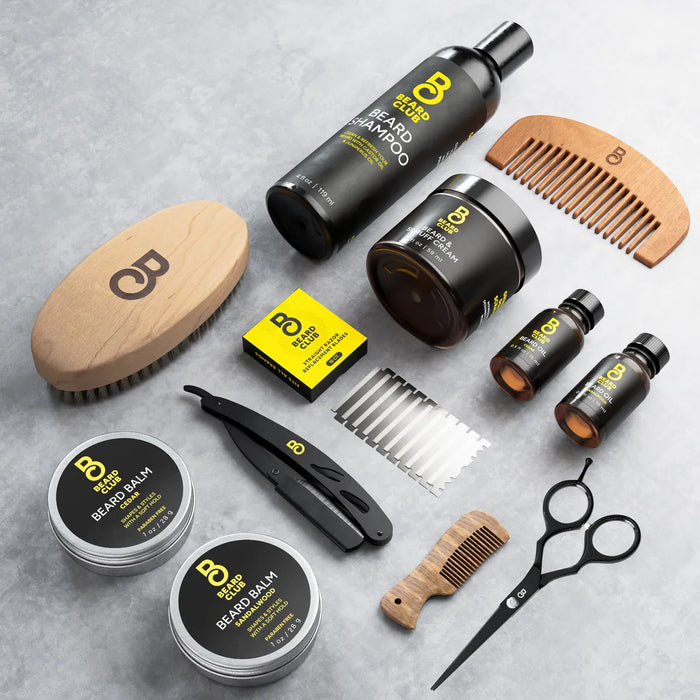
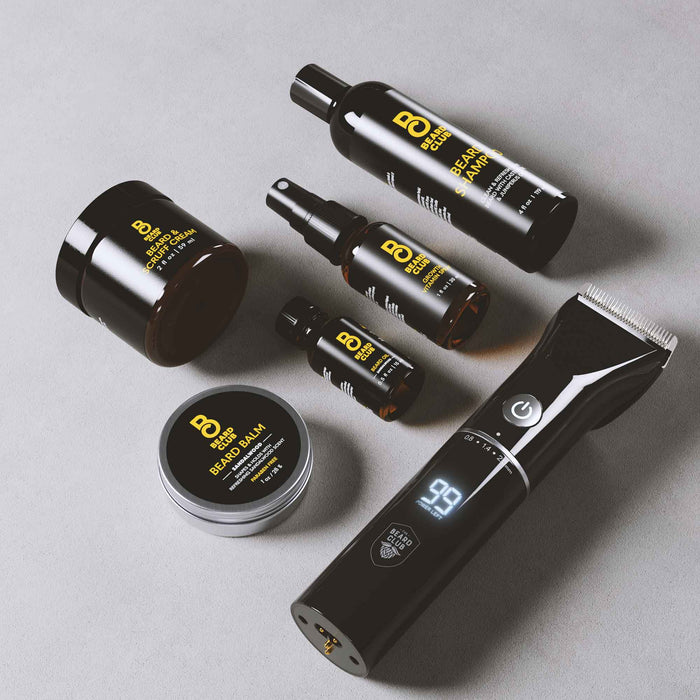
Building a routine around the right products makes the daily part quick. A beard growth kit covers the oil and care basics, and pairing it with a quality beard trimmer gives you guards long enough to shape curls without flattening them.
Frequently Asked Questions
How do I make my curly beard softer?
Wash less often, condition every time you wash, and apply beard oil daily while the hair is still slightly damp. Follow the oil with a small amount of balm to lock in moisture. Avoid hot water and rough towel drying, both of which dry curls out.
Should you trim a curly beard wet or dry?
Trim a curly beard dry. Curls stretch when wet and shrink as they dry, so a beard trimmed wet usually ends up shorter than you intended. Pick or comb it out to its natural shape first so you can see the real length.
How do I stop ingrown hairs in my curly beard?
Avoid cutting hair right at the skin. Trim edges with clippers that leave about a millimeter of length, shave with the grain in a single pass if you shave, don't stretch the skin, and exfoliate gently a couple of times a week. If bumps keep coming back, see a dermatologist.
Can I straighten my curly beard?
Yes, temporarily. Brushing a damp beard downward and blow-drying it on low heat relaxes the curl until your next wash, and balm helps hold it. Frequent high heat dries out and damages curly hair, so use it sparingly.
What's the best comb for a curly beard?
A wide-tooth comb or a beard pick works best on curls. Use it on damp hair and start from the ends, working up toward the skin. Fine-tooth combs snag and break curly hair, especially when it's dry.
Why is my curly beard so itchy?
Curly beards dry out quickly because natural oils struggle to travel down each bend in the hair, and dry skin underneath itches. Daily oil worked down to the skin usually solves it. Itching with bumps along the neck or jaw can also point to ingrown hairs.