The first gray hairs usually show up at the temples, and once they start, they keep coming. Hair dye for men has come a long way from the flat, shoe-polish look people joke about, and a good men's hair color can blend or cover gray so it looks like your own.
This guide walks through which type of dye fits your goal, how to choose a shade that looks natural, how to apply it at home, and how to handle gray temples and root touch-ups as your hair grows.
TL;DR
- Pick the formula by goal: Semi-permanent color softens gray and fades over several washes, while permanent hair color for men covers gray until it grows out.
- Go one shade lighter: A shade slightly lighter than your natural color looks more natural than an exact match, and you can always go darker next time.
- Temples gray first: Graying usually starts at the temples, so many men color only that area and leave the rest of their hair alone.
- Roots show in a few weeks: Scalp hair grows about half an inch a month, so plan on root touch-ups every two to four weeks with short hair.
- Patch test every time: The FDA recommends a skin test before every use, even with a dye you have used before.
- Time it exactly: Leaving dye on longer than the directions say won't improve coverage and can irritate your scalp.
Why Men Go Gray, and Where It Shows Up First
Hair gets its color from pigment cells fed by melanocyte stem cells in the hair follicle. A 2023 study in Nature led by Qi Sun and Mayumi Ito at NYU found, in mice, that these stem cells normally move between compartments of the follicle, and that with age more of them get stranded in place and stop producing pigment. New hairs then grow in without color.
Graying also happens later than the old rule of thumb suggests. The "50-50-50" rule says half of people are half gray by age 50, but a 2012 survey of more than 4,000 adults by Panhard, Lozano, and Loussouarn in the British Journal of Dermatology put the real figure at 6% to 23%, depending on ethnic background and natural hair color. The same study found men carried significantly more gray than women.
Graying usually starts at the temples and sideburns, then moves to the crown and the back of the head. That pattern is why gray temples get their own section below, and why plenty of men only need to color part of their hair.
Which Type of Hair Dye Should Men Use?
Start with what you want the gray to do. Some men want it gone completely, while others only want it softened or hidden for a weekend. Each goal points to a different formula.
| Your goal | Best formula | What to expect | Upkeep |
|---|---|---|---|
| Hide a few grays for an event | Temporary color | Coats the hair surface and washes out with shampoo | Reapply as needed |
| Soften gray without hiding it | Semi-permanent or demi-permanent | Blends gray into your natural shade so it reads as lighter strands | Fades gradually; reapply every few weeks |
| Cover gray completely | Permanent | Full, even color that stays until the hair grows out | Root touch-ups every 2 to 4 weeks with short hair |
| Fix gray temples only | Permanent or demi-permanent, applied to the temples | Targets the gray zones and leaves the rest natural | Touch up the temples as they grow |
| Change your color completely | Permanent dye, plus lightener if going lighter | Big shift in color; going lighter needs bleach | High; best handled by a professional colorist |
If you're coloring for the first time, a semi-permanent formula is the low-risk way to see how you like the look. Once you know the shade works, permanent hair dye gives you longer-lasting coverage with less frequent application.
How to Choose the Right Hair Dye Shade for Men
Shade choice is where home color goes wrong most often. Box shades typically turn out darker on your head than they look on the package, and one solid dark color across hair that used to have natural variation is what makes dyed hair look unnatural.
The fix is to pick a shade one step lighter than your natural color, and check it against your eyebrows, which often keep their pigment longer than your scalp hair. If your hair is somewhere between two shades, choose the lighter one, since it is easier to go darker next time compared to going lighter.
| Your natural color | Start with | Why |
|---|---|---|
| Black | A natural or soft black | Jet black can look flat and harsh once it covers gray |
| Dark brown | Dark brown, or medium brown for heavy gray | The lighter option blends better when more than half your hair is gray |
| Medium brown | Medium brown or light brown | Keeps dimension so the color doesn't read as one solid block |
| Light brown or dark blond | Light brown | Gray blends easily into lighter shades, so you need less coverage |
Your gray percentage also shapes the result. With a light scattering of gray, a single shade close to your own works well. If you're mostly gray, a lighter shade or a shorter processing time leaves some natural variation, and our guide to gray beard styles is worth a look if you're weighing whether to keep some silver on purpose.
How to Use Men's Hair Dye at Home
- Run a patch test 48 hours ahead. Dab a small amount of mixed dye on your inner elbow or behind your ear and leave it for two days, and skip coloring if you see redness, itching, or a rash.
- Prep your skin and space. Put on gloves, drape an old towel over your shoulders, and rub a thin layer of petroleum jelly along your hairline and ears to keep dye off your skin.
- Start with dry hair. Hair washed a day earlier gives your scalp a light layer of natural oil that helps reduce irritation.
- Mix only what you need. Combine equal parts color and developer if your kit uses two parts, and mix a small batch first so you aren't wasting product.
- Apply where the gray is heaviest first. Work the color in with the applicator brush or comb, starting at the temples and part, then move to the rest of the hair in short strokes.
- Set a timer and stick to it. Follow the processing time on the package, adding time only in small steps on later applications if your gray is especially coarse or resistant.
- Rinse until the water runs clear. Use lukewarm water, then condition to smooth the hair and help the color settle.
Pro tip: If you're nervous about going too dark, apply the color to the temples and part first, wait half the processing time, then comb the rest through. The areas that need the most coverage get the full time, and the rest of your hair picks up a softer tone.
A note on safety: Never use hair dye on your eyebrows or eyelashes, since it can injure your eyes. Rinse immediately if dye causes burning, and stop using any product that triggers itching, swelling, or a rash. Get emergency care for swelling of the face, lips, or eyes, or any trouble breathing.
How to Cover Gray Temples
Gray temples are often the first place men want to color, and they are also the easiest place to overdo it. A dark, solid patch at the sides of your head draws more attention than the gray ever did.
Apply color to the temples and sideburns only, using the applicator comb or a small brush, and feather it slightly into the hair above so there is no hard line. Pick a shade on the lighter side of your natural color here, since temple hair is often the grayest on your head and the contrast shows most there. If you wear a beard, check that your sideburns blend into it, since a gap in color where hair meets beard is easy to spot.
How Often Should You Do Root Touch-Ups?
Scalp hair grows about half an inch a month. On a longer cut that regrowth blends in for a while, but on short hair even a quarter inch of gray at the root stands out. Short-haired guys using permanent color usually touch up every two to four weeks.
Apply color to the new growth only. Running permanent dye over the full length every time builds up color on older hair, which makes the ends darker than the roots and adds unnecessary processing. If the lengths have faded, comb the color through them for only the last few minutes of processing to refresh them.
Planning your haircut around touch-ups helps too. Getting a trim a few days before you color means you aren't dyeing hair that is about to be cut off, and fresh edges make the color look sharper.
Can You Use the Same Dye on Your Hair and Beard?
You can if the product is labeled for both. Beards often gray on a different schedule than scalp hair, and using one formula on both keeps the shades consistent so your beard and hair look like they belong to the same person. Beard hair is coarser, and grays there can grow in wiry and dry, which you can read more about in our guide on how age changes your beard.
Never use a dye on your face unless the label says it is safe for facial hair. For a full walkthrough of coloring facial hair, see our step-by-step guide on how to dye a beard, and our breakdown of how long beard dye lasts covers what to expect between applications.
Getting Your Hair Dye Right the First Time
Good hair color for men starts before the dye touches your head. Choose a formula that fits your goal and a shade one step lighter than your natural color, then plan root touch-ups around how fast your hair grows. Stick to the processing time, and the result reads as your own hair instead of a dye job.
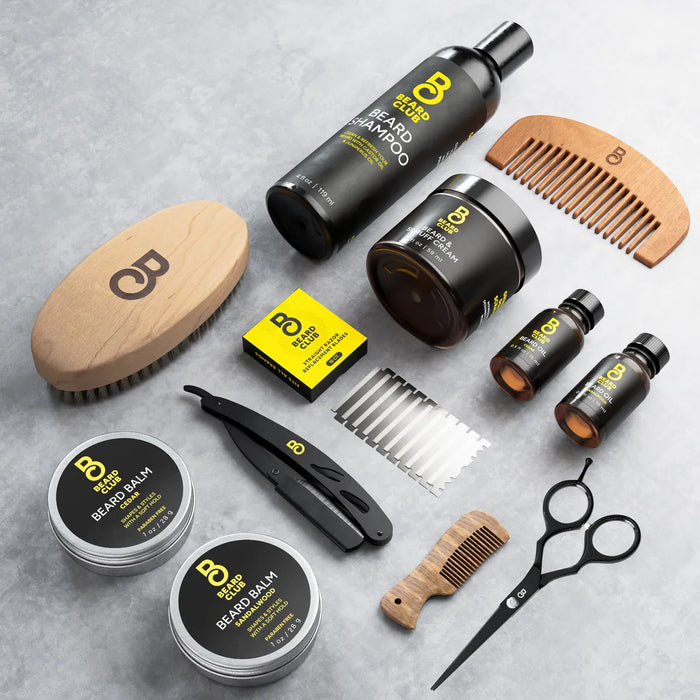
The Beard Club's Beard & Hair Color collection is made for both your hair and your beard, so you can match the two with one product. Keep a Beard Comb on hand to spread color evenly through your beard and keep it neat between touch-ups.
Frequently Asked Questions
What is the best hair dye for men?
The best hair dye for men is a formula made for shorter, coarser hair that develops quickly and comes in natural-looking shades. Pick one that matches your goal, whether that is softening gray or covering it completely. A product that works on both your hair and beard keeps your color consistent from top to bottom.
Should I dye my hair darker or lighter to cover gray?
Go one shade lighter than your natural color. Box shades often turn out darker than they look on the package, and solid dark color with no variation is what makes dyed hair look obvious. Starting lighter gives you a softer result, and you can always go a step darker on the next application.
How long does men's hair dye last?
Permanent men's hair dye stays in the hair until it grows out or gets cut. Gray roots usually start to show within two to four weeks on short hair, since scalp hair grows about half an inch a month. Semi-permanent color fades gradually over several washes.
Can I dye just my gray temples?
Yes. Many men color only the temples and sideburns, where gray shows up first, and leave the rest of their hair natural. Use a small brush or the applicator comb, keep the dye on the gray areas, and blend lightly into the surrounding hair.
Can I use men's hair dye on my beard?
Only if the label says it is safe for facial hair. Some men's hair dyes are formulated for both hair and beard, which makes it easier to match the two. Always patch test first, since the skin under a beard is sensitive.
How do I keep hair dye from looking fake?
Choose a shade one step lighter than your natural color, avoid flat jet black unless your hair is truly that dark, and stick to the processing time. Leaving a little gray, especially at the temples, also reads as natural instead of painted on.
Do I need to do a patch test every time I dye my hair?
Yes. The FDA advises doing a patch test before every use, because you can develop an allergy to a dye even after using it without problems in the past. Apply a small amount to your inner elbow or behind your ear and wait 48 hours before coloring.